
The art of commemorating the deceased is one of the most challenging artistic forms. The choice of material, style, size, fonts, and especially the details on tombstones – all these elements should work together.
What are details on tombstones in cemetery art?
Details include small sculptures, bas-reliefs, plaques, coats of arms, vases, ornaments, combinations of various materials (glass or metal with natural stone), elements of ceramic mosaics, or gilding. Each style has its own unique details.
How the cemetery art looked in the past?
In pre-war Poland, cemeteries were filled with small-scale architecture with a wealth of detail. This can be particularly seen in the old section of Powązki Cemetery (works by Wacław Szymanowski, Bolesław Syrewicz, and Luigi Pamneri) or in the Rakowicki Cemetery in Krakow. The old part of this cemetery consists primarily of burial chapels and carved tombstones, created in various styles. It features monumental works and designs by Xawery Dunikowski, Antoni Madeyski, Franciszek Mączyński, Stanisław Odrzywolski, and other renowned artists.
A large monument or a small detail od tombstone?
The value of a monument isn’t determined by its size, but many years ago it was normal. Many old cemeteries feature tall sculptures intended to emphasize the status of the deceased. Interestingly, the monument Hetman Jan Tarnowski, located in Tarnów Cathedral,13.80 meters high, is the tallest tombstone in Europe.
Such imposing monuments were symbols of social standing. Today, it seems to by completely different. The details are sometimes so subtle that you have to get very close. However, they are often what make a tombstone unique.
Why are details on tombstones important?
Details on tombstones tell human stories. Thanks to them, we learn about the deceased’s profession and infer their passions. Sometimes these details also reveal important life events that will forever remain hidden from outsiders, but speak volumes to those who remain…
Details on Tombstones – Examples
When we walk through cemeteries, we notice symbolic references to the life story, and sometimes even the passions, of the deceased on tombstones. That’s why painters’ tombstones often feature palettes and brushes, writers’ tombstones feature rolls of parchment and decorative quills, and musicians’ tombstones feature violins, piano keys, or a single musical note…
Interesting examples include:
- Marek Grechuta’s tombstone. The figure holds a small horse in his hand (a reference to his song “Heart”).
- Władysław Nehrebecki’s tombstone, director and creator of the animated films from the “Bolek i Lolek” series. The figures of Bolek and Lolek are carved on the artist’s tombstone.
- The tombstone of the painter Edward Dwurnik. It is carved with a drawing of a Polish town, his name, surname, and dates. This tombstone was designed by his daughter Pola and her mother, Teresa Gierzyńska.
Symbols on the graves of priests and people associated with the Church
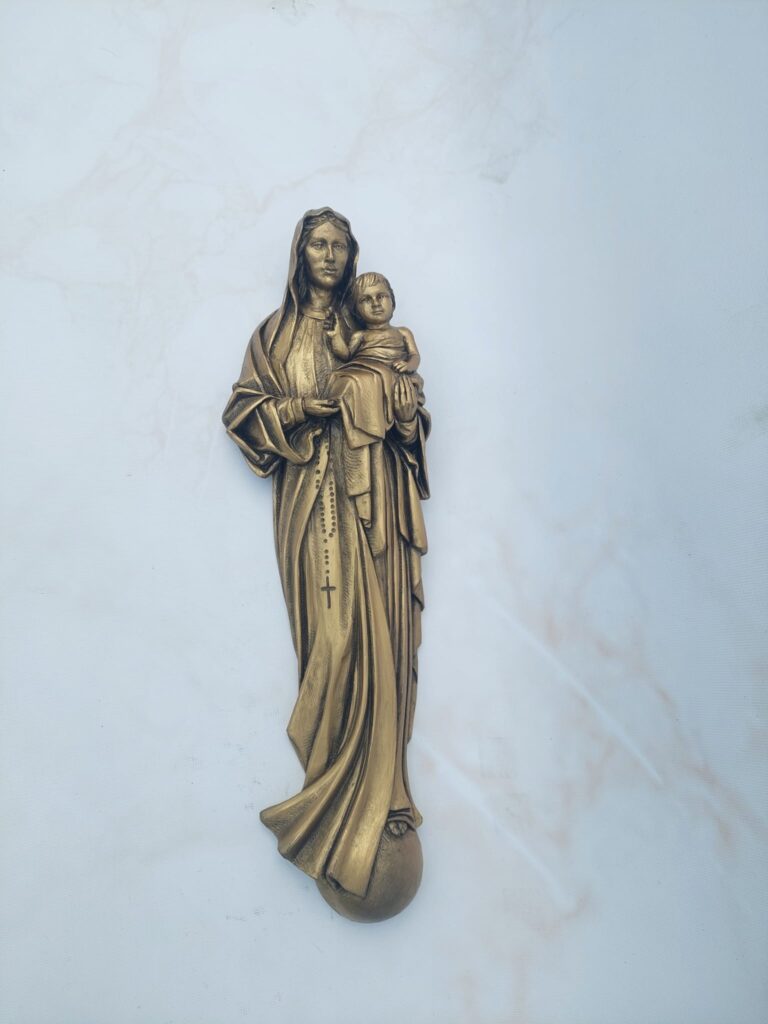
Details of a purely religious nature constitute a separate category. On the graves of priests, we most often notice symbols related to the Eucharist (chalice, chasuble, or prayer book). On the graves of people associated with the Living Rosary, we find carved rosaries or sculptures of Our Lady of the Rosary. These are usually small, simple, and modest. They can be made of bronze or carved directly into the stone, preserving the simplicity of the material.
Children’s graves
Children’s graves are so small that they could be a detail themselves. The figure of a sitting or kneeling child, an angel, a heart, bird motifs, or roses are the most common elements found on children’s graves.
Details on tombstones – summary
The goal of funerary art is to create a place which promotes reflection. A place that reminds us of the dead, but doesn’t overwhelm us with too many elements. That’s why skillfully designed details on tombstones are so important. In a future article, we’ll describe how we capture life in stone in our studio.
The texts we used to write this article:
https://www.it.tarnow.pl/dwa-najwyzsze-w-europie-nagrobki-czyli-ciekawostki-w-tarnowskiej-katedrze/
https://blog.magiawarszawy.pl/fangor-i-dwurnik/
https://businessinsider.com.pl/wiadomosci/powazki-najciekawsze-grobowce/v57m721
