
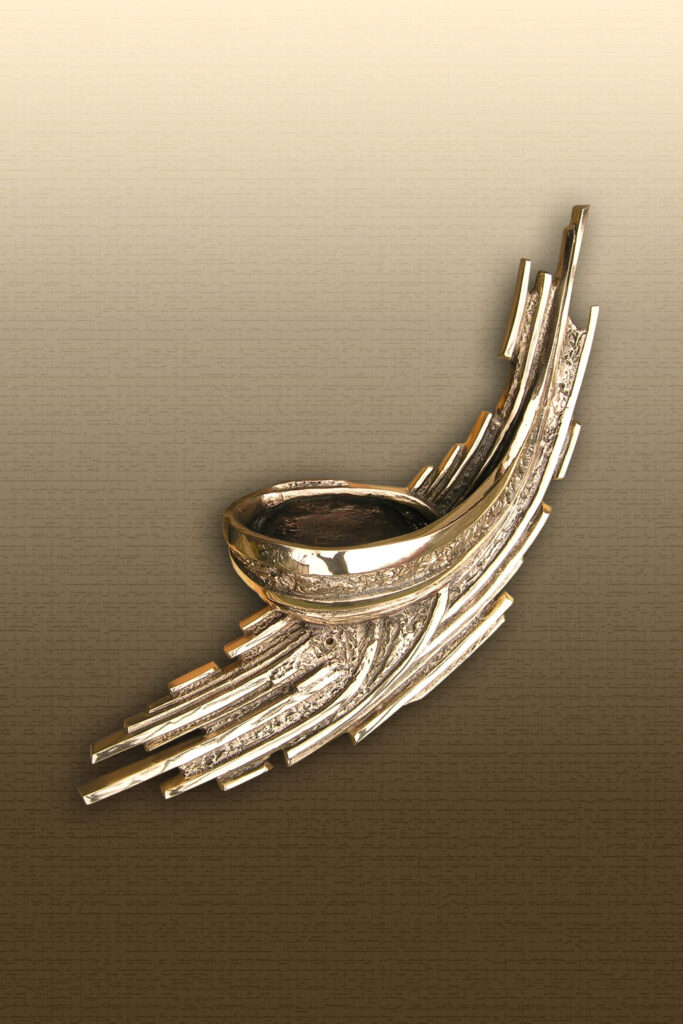
Religious interiors require attention to every small detail. They should serve the liturgy and foster prayer. It’s important not to furnish churches by selecting pretty elements from various catalogs. The entire design should create a cohesive whole, maintaining a unity of materials and form, and reflecting the architectural style of the given interior. One significant, albeit small, detail is a holy water stoup. In this article, we invite you to discover the beauty and significance of stoups.
Holy water stoups – symbolism and functionality.
The practice of dipping one’s hands in water before entering a church dates back to antiquity. People entering a Greek or Roman temple was required to wash beforehand.
Besides its spiritual significance (cleansing from everyday life), it also had practical (hygienic) significance.
Christianity adapted this custom, giving it a new spiritual dimension. For us, consecrated water is one of the signs of God’s presence in the church. The sign of the cross we make is a profession of faith. In short, it reminds us that trough baptism we are now members of the church.
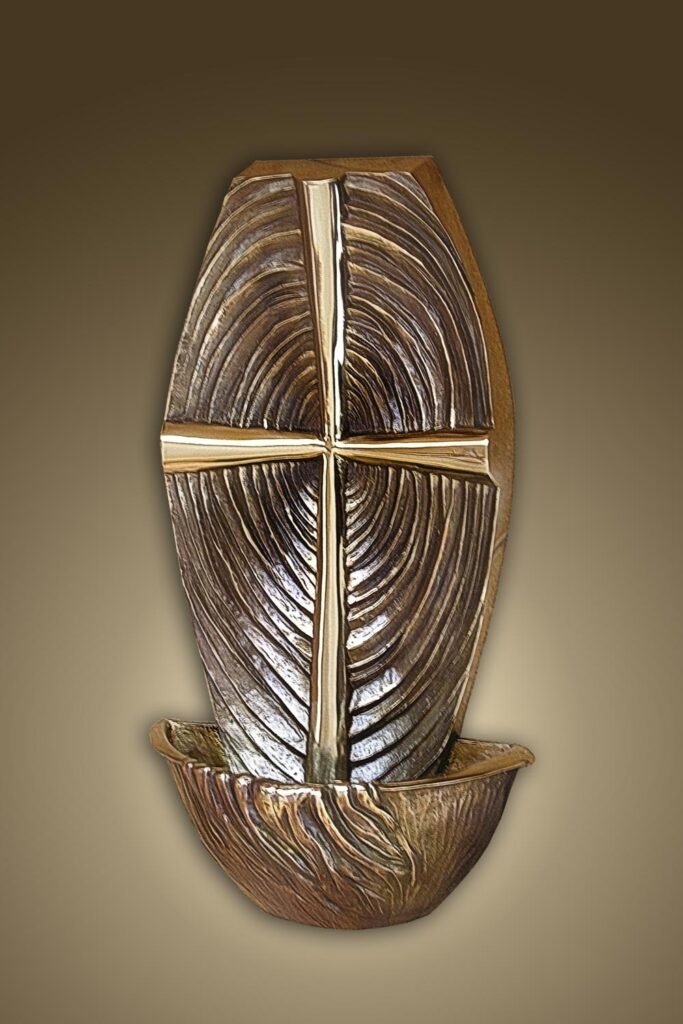
Why is it important to pay attention to the design and construction of holy water stoups?
A stoup (aspersorium) is a vessel filled with holy water, either freestanding or wall-mounted. These are usually small sculptural forms made of various materials, placed at the entrance to a church. They are often the first thing that catches the attention of the faithful.
A church stoup is a vessel permanently placed in the church vestibule. Holy water stoups are also placed at side entrances. It is important that they are visible and accessible to all the faithful entering the church. They should be placed in places where they do not obstruct the movement of people.
The process of creating the stoups – a variety of materials.
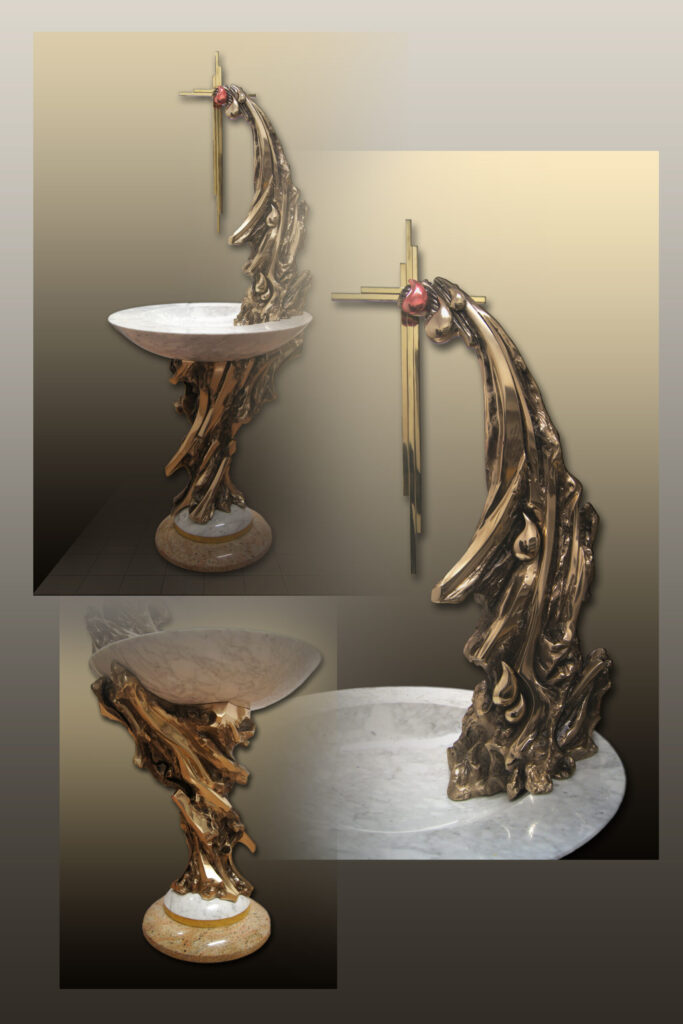
We make stoups from durable materials such as stone and metal. Marble and granite are durable and easy to clean.
The water container itself can also be made of chrome-nickel steel, which can be refurbished or even replaced over time.
Brass stoups and bronze stoups are the best choice if we want to create precise decorations.
We also often combine stone with metal or glass.
Artistic Styles of Holy Water Stoups:
Classic
Gothic and Baroque interiors require numerous decorations, ornaments, and carved details. This distinguishes them from the simplicity of Romanesque interiors.
Modern
Contemporary designs interestingly complement stoups with geometric shapes. They are rather simple in form. We believe it’s best to make them from materials already used in other furnishings present in the church interior.
Stoups for Churches – From Concept to Implementation.
It all starts with an idea.
During designing an entire church interior from scratch or adapting the existing one, we try to find a distinctive motif that recurs in all church’s details. If we incorporate this motif into the design, we obtain a sense of harmony and unity.
Summary
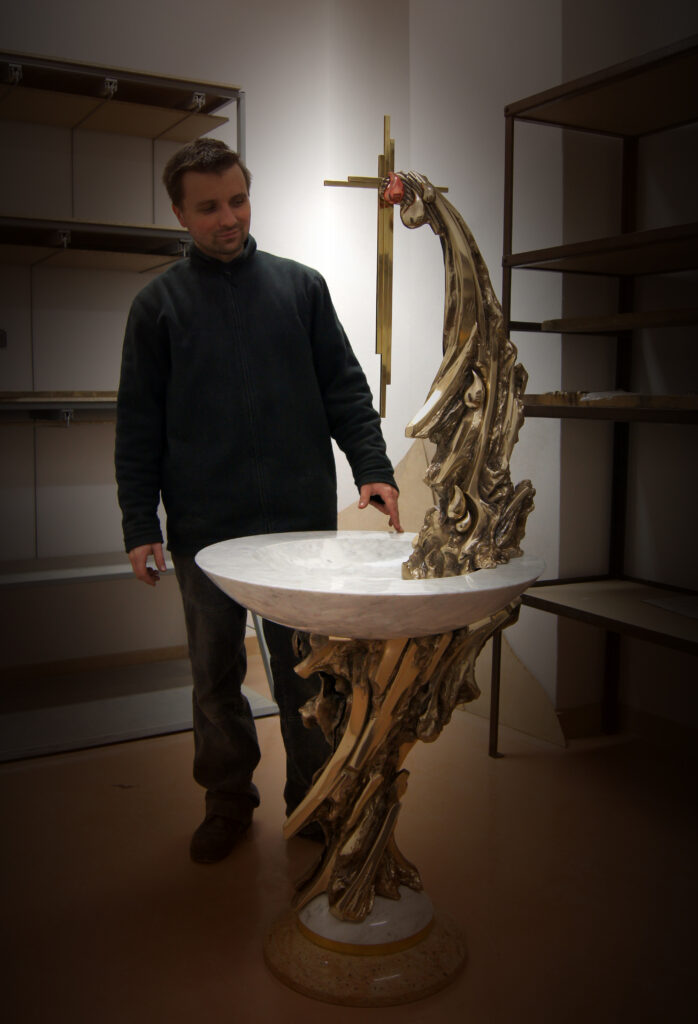
We create freestanding and wall-mounted holy water stoups.
They are created in our studio or in collaboration with stonemasonry workshops.
We will be honored to make a holy water stoup for You.
Additionally, we will also help you find the right location for it.
Other our articles you may be interested in:
Commemorative plaque – life written in stone.
The following sources were used in preparing this article:
https://deon.pl/wiara/duchowosc/jak-wlasciwie-korzystac-z-kropielnicy-w-kosciele,463982
https://pl.wikipedia.org/wiki/Aspersorium
